
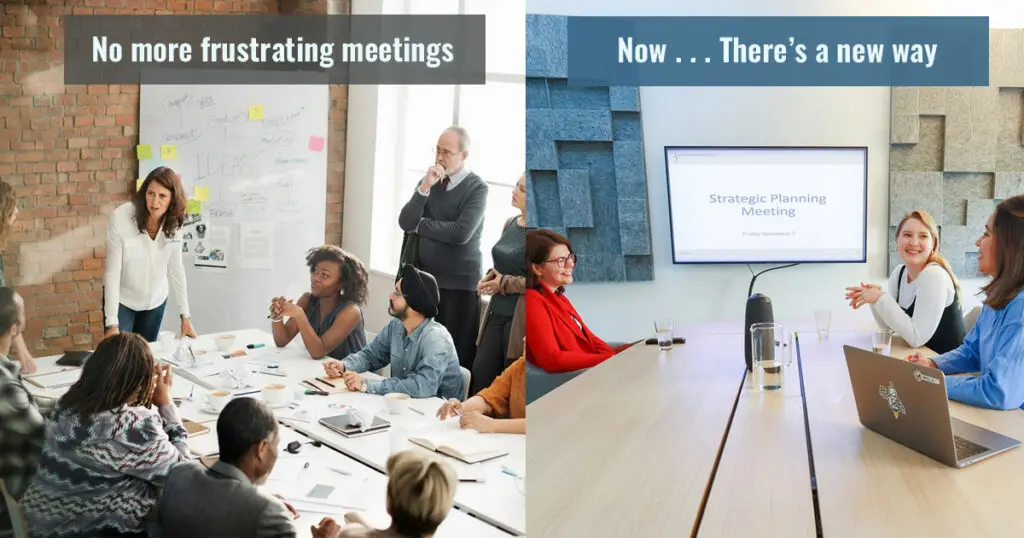
Your team is already overloaded. So why does the planning process ask them to do even more? Most strategic planning approaches assume your staff has unlimited time and attention. As a result, people spend weeks gathering input, debating priorities, and shaping long reports that few will ever read or use. Overstretched teams feel pressure to participate, yet the process drains the very capacity they need to execute next year’s goals.
The Problem With Conventional Planning
Many conventional planning processes were designed for a different era. They depend on long meetings, broad participation, and detailed narrative plans. They treat planning as a separate project rather than as part of the organization’s daily reality.
For teams that are already carrying heavy workloads, these processes create three predictable problems:
- They expect hours of brainstorming, committee work, and facilitation that staff simply cannot spare.
- They often produce large plans intended to impress boards rather than guide action.
- They create misalignment, which leads to friction, delays, and rework during implementation.
This is why so many organizations begin the year with a plan that does not match their actual capacity.
Plan to Your Real Capacity
A better planning process starts with an honest understanding of what is possible. Leaders do not need a bigger plan. They need a better path.
Use a Better Process
Planning should improve clarity and alignment without adding weeks of extra work. A technology enabled approach makes this possible by collecting insights early, identifying areas of agreement and disagreement, and allowing leaders to focus only on the decisions that matter.
Consider the Full Scope Then Narrow Priorities
Teams should begin by exploring the full landscape of goals, barriers, risks, and assumptions. Once the scope is visible, leaders can narrow to the essential priorities that fit the organization’s real capacity.
Shorten Planning Cycles
Annual planning should not take months. A shorter cycle encourages focus and provides flexibility to adjust as the year unfolds.
Use Technology to Maximize Quality While Minimizing Effort
When staff provide input through a structured platform before meetings, leaders gain more insight in less time. This combination of better data and better alignment increases the quality of the final plan even though the effort is significantly reduced.
Three Tools for Capacity Constrained Planning
Here are three tools that immediately reduce the workload of planning while increasing the value of the results.
- Use a Technology Platform to Gather Insights Before Meetings
Collecting perspectives through an alignment tool reveals patterns, consensus, and disagreements long before anyone enters a room. This lets leaders concentrate on decisions rather than conversation management. Staff contribute on their own schedule and in a fraction of the time.
- Build Change Management Practices Into Planning
Change management principles reduce resistance later. When leaders use these practices to identify stakeholder concerns, clarify roles, and surface assumptions during planning, they eliminate delays that commonly appear during implementation.
- Design Meetings Around Decisions
Meetings should be designed around the decisions that must be made. When leaders follow a structured sequence that identifies what to discuss, in what order, and how, the planning process becomes faster, more productive, and more inclusive.
Mini Case: Wilmington Drama League
In 2024 the Wilmington Drama League needed a strategic plan for the upcoming year, but staff and volunteers were already juggling productions, fundraising commitments, and operational responsibilities. They chose to simplify the process.
In one week they collected input from board members, key volunteers, and the artistic leadership team through a structured platform. The data revealed clear alignment on several goals, along with a handful of barriers and assumptions that required clarification.
Instead of holding multiple committee meetings, they used a single one day retreat to review the findings, make decisions, and finalize priorities. With fewer initiatives and clearer accountability, the organization accomplished more in 2025 because leaders focused on what mattered most.
Next Steps
If your team is stretched thin, your planning process should support them and not strain them. A technology enabled and change ready approach produces stronger plans with less time, less effort, and far more alignment.
If you want to create a focused and realistic 2026 plan that your team can actually implement, explore the approach that nonprofits and coalitions are using to increase clarity and reduce friction.
 Learn about our Strategic Planning process or Tracy Morgan’s #1 best-selling e-book, “How to Conduct an Effective Strategic Planning Process with Minimal Effort.”